No one ever sat me down and told me, “This will take time. Be patient. Stay consistent. The real results will come.”
Instead, I was given quick fixes—superficial treatments that only worked for a short time. Everyone focused on what they could see on the surface, but no one looked deeper to understand that my skin needed real healing from within—a process that would take time.
I wish someone had told me back then that skincare isn’t an overnight transformation—it’s a journey.
Real, lasting results come with commitment, discipline, and patience. Just like with exercise, you don’t wake up with a fit, toned body after one workout. You have to show up consistently, put in the effort, and trust that the results will follow.
That’s what I had to learn—the hard way.
The Search for Instant Solutions That Didn’t Exist
For years, I was trapped in a never-ending cycle of trying new treatments, switching products, and hoping for a miracle. Each time, I expected to wake up with the skin I had always dreamed of—only to rush to the mirror and feel disappointed when nothing had truly changed. I experienced:
- Facials that gave me a temporary glow, but didn’t last.
- Products that promised to erase scars, but never delivered.
- Treatments that worked on the surface, but didn’t heal my skin from within.
No one explained that skin needs time to regenerate. No one told me that microneedling wouldn’t give me perfect skin after one session, but with six or seven months of consistency, I would see the results I had been longing for.
Microneedling: The First Step Toward True Skin Transformation
When I decided to try microneedling, I was hoping for quick results. I thought, “Perhaps one or two sessions will fade my scars, smooth my texture, and transform my skin.”
But after my first session, I looked in the mirror and saw redness. No instant glow. No dramatic change. Just a mild sunburn effect. And for a moment, I thought, “Did I just waste my time?”
What I didn’t know then was that the magic was happening beneath the surface:
- Collagen takes weeks to rebuild. Deep skin repair doesn’t happen overnight—it takes time for your skin to produce new collagen and heal itself.
- You need multiple sessions—one session won’t erase scars. However, regular treatments every four weeks creates cumulative results, improving the skin layer by layer.
- Progress is gradual but powerful. Just like in the gym, you don’t see muscle growth after one workout, but with consistent training, you wake up one day and realize how much has changed.
Committing to the Journey: What Finally Worked for Me
Once I learned this, I did things differently. Instead of chasing quick results, I made a promise to myself: I would stick to microneedling for at least six months, pair it with a simple, effective skincare routine, and be patient.
Here’s what my new approach looked like:
- I simplified my skincare routine, focusing on:
- A gentle cleanser
- A hydrating serum
- A moisturizer to strengthen my skin barrier
- Sunscreen every day, no excuses
- I gave my skin time to respond to each product before introducing anything new. No more jumping from one product to the next.
- I changed my diet by reducing inflammatory foods like dairy and sugar, improving my water intake, and focussing on nourishing my skin from the inside out.
- I stayed consistent with my microneedling plan: one session per month, no skipping, and no giving up after just two sessions.
The Results: What Months of Dedication Gave Me
And then, one day, I looked in the mirror and saw the changes I had been waiting for.
 The scars that once seemed permanent? Faded.
The uneven texture that made my makeup cake and look unblended? Smoothed out.
The dull, tired skin I had gotten used to? Replaced by a natural, healthy glow.
It didn’t happen after one session. It didn’t happen after two. It happened after months of showing up for my skin, even when I didn’t see immediate results.
That’s when I realized—this is exactly like fitness.
If you want to build a strong, toned body, you don’t go to the gym once and expect results. You train consistently, you push through the days when you don’t feel like it, you nourish your body properly, and over time, you see change.
Skin is no different. It needs time, care, and consistency.
The Lesson I Wish Someone Had Told Me Earlier
If I could go back and talk to my younger self—the girl desperately searching for the perfect skincare product, jumping from treatment to treatment—I would tell her this:
- Stop chasing instant fixes.
- Stick to a solid routine and give it time.
- Commit to treatments that work from the inside out, like microneedling.
- Care for your skin the way you care for your body—both need discipline and patience to show results.
Final Thoughts: Trust the Process, Stay Consistent
Microneedling wasn’t just a treatment for me—it was a lesson in patience and self-care. It taught me that trusting the process, staying consistent, and not giving up when results aren’t immediate leads to real transformation.
If you’re struggling with your skin, feeling frustrated, and wondering if it’s worth it—this is your reminder to keep going. Stick to your plan, show up for your skin, and trust that results are on their way, even if you can’t see them yet.
What’s your skincare journey like? Have you ever felt frustrated waiting for results? Let’s talk in the comments—I’d love to hear your experience!
]]>But the reality was far more challenging than I had imagined.
Little did I know this move would unravel parts of me I thought I had control over and lead me down a completely different path than the one I had planned. Yet, through this difficult journey, I discovered a new purpose, a fresh direction, and an exciting new plan.
When I arrived, the shift in climate was harsh, the environment unfamiliar, and my body rebelled in ways I couldn’t understand. My skin was the mirror that reflected my body’s struggles.
My once-clear complexion erupted into breakouts. My hair turned brittle, and the reflection in the mirror no longer felt like my own.
As someone who has always taken pride in a healthy, active lifestyle, I felt defeated. I exercised regularly. I ate clean. I did “all the right things.” The vibrant, glowing skin I used to take for granted turned into dull, inflamed patches of redness and discomfort.
I was losing control—and with it, my confidence.
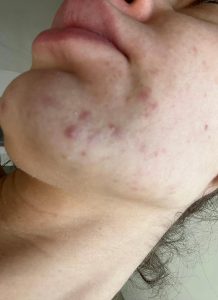
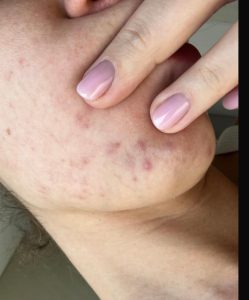
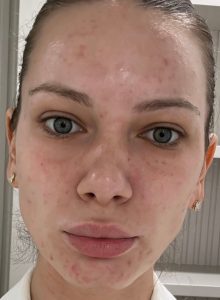
Navigating a Sea of Misinformation in Search of the Truth
Confused and desperate, I dove headfirst into finding solutions—any solutions.
I visited countless clinics, sat through endless consultations, and spent night after night researching what could be wrong with me. Each time I received the same cold, clinical advice, “It’s hormonal, you need medicine for it.”
As a pharmacist, I knew better. I understood the risks of the medicines they recommended and the impact they could have on my body. It felt like they were offering sledgehammer solutions to a delicate, complex problem.
Deep down, I believed there had to be a better way. A gentler way. But I didn’t know what it was.
For two years, I searched for answers—undergoing hormonal check-ups, food intolerance tests, and countless treatments—some gentle, others harsh. Chemical peels, lasers, and so-called miracle serums all promised results, but they left my skin raw, inflamed, and worse than before.
I trusted professionals to help me, but to them, I was just another case file. No one took the time to understand me—my skin, my struggles, or the emotional toll it had on me.
I emptied my wallet while my bathroom shelves piled up with products that promised to fix me. But despite it all, the mirror told a different story—I was getting worse.”
Watching My Skin Struggle and Losing My Confidence
There were days I couldn’t bring myself to leave the house. The thought of people seeing my red, angry skin was unbearable. It wasn’t just physical—it was emotional. I felt trapped, like my skin was screaming for help, and no one—not even me—could figure out how to soothe it.
I destroyed my skin barrier repeatedly, thinking I was helping. Harsh scrubs, over-cleansing, and poorly chosen products left my skin raw and stripped of its natural defenses. I felt like I was at war with my face, and I was losing.
The worst part wasn’t just the breakouts or the scars—it was the hopelessness. I started to believe I might never get my healthy, glowing skin back. And with every failure, I felt more defeated.
Turning Pain into Passion and Purpose
Somewhere, amid all the frustration, I realized that if I couldn’t find someone to help me, I needed to help myself.
I stopped looking outward for quick fixes and looked to myself for solutions.
My struggles gave me a purpose: to create a space where others wouldn’t have to feel as lost as I did.
The next step was clear. I decided to open my own clinic.
I wanted to create a haven for people like me—those who’d been told to ‘just take a pill,’ given one-size-fits-all solutions, or dismissed with cookie-cutter advice for deeply personal problems. I wanted to offer what I had always needed: understanding, guidance, and a personalized plan tailored to their unique skin and needs.
Your Choices Matter
Looking back, I see now how crucial it is to choose the right places, the right products, and the right professionals.
Skincare isn’t just about looking good—it’s about feeling whole. It’s about reclaiming your confidence and knowing that your skin can heal when it’s given the care it needs.
I share this story not just as a professional, but as someone who has been through it all. I know what it’s like to cry over your reflection, to feel like you’ve exhausted every option, and wonder if your skin will ever recover.
And through my journey, I also know there is hope.
Your Skin, Your Journey
If there’s one thing I’ve learned, it’s that your skin is unique, and it deserves care that’s just as personal.
There is no one-size-fits-all solution, no magic product that will work for everyone. That’s why, at my clinic, we take the time to understand your skin, your story, and your needs.
We don’t just treat skin; we treat the whole person behind it. Because I know what it’s like to feel invisible behind your insecurities. And I know how life-changing it can be when you finally find the answers you’ve been looking for.
This journey, though painful, has become my purpose.
I turned my struggles into a mission—to help you feel confident in your own skin. You don’t have to do this alone. You deserve care, understanding, and real results.
Your skin deserves better. You deserve better. And I’m here to help you get it.
]]>
A stark contrast to the present-day woman.
Thanks to modern aesthetic technology, women enjoy unprecedented freedom to change various aspects of their appearance, often with minimal side effects and downtime. This raises an interesting question: “Has this made women more attractive today than they’ve been in history?”
The ever-changing beauty ideal
To be entirely honest, it’s a tricky question to answer.
History shows that beauty standards are constantly changing, shaped by factors such as cultural norms, traditions, societal values, media, and fashion. Just take a look at the different ideal body types broken down by place in time:
- Roaring twenties (1920s): Flat chest, downplayed waist, short bob hairstyle, boyish figure
- Golden age of Hollywood (1930s to 1950s): Curves, hourglass figure, large breasts, slim waist
- Swinging sixties (1960s): Willowy, thin, adolescent figure with long, slim legs
- Supermodel era (1980s): Athletic, svelte (but curvy), tall, toned arms
- Heroin chic (1990s): Waifish, extremely thin, androgynous
- Postmodern beauty (2000s to today): Flat stomach, “healthy” skinny, thigh gap, large breasts, and butt
People from the 1920s would not have appreciated the aggressively curvy body of Kim Kardashian, who is arguably the poster woman of ideal beauty standards for the modern woman.
How technology in aesthetics is empowering women
All this to say … while we can’t objectively say that women are more attractive today than they have been in history, we can say that modern aesthetic technology has enabled them to pursue enhancements that align with current beauty standards.
The non-invasive beauty treatments women can choose from today prove this point perfectly.
Laser hair removal
In 1575, the Spanish physician Juan Harte wrote, “Of course, the woman who has much body and facial hair (being of a more hot and dry nature) is also intelligent but disagreeable and argumentative, muscular, ugly, has a deep voice, and frequent infertility problems.”
This aversion to women with body hair extends beyond him and that period.
A recent 2021 research paper found that men still prefer women without body hair, no matter if it’s located in the leg and/or armpit. More specifically, when the researcher asked men to choose the picture they found most attractive, 92.5% chose the hairless women.
And when it came to explaining their answers, the participants stated the following opinions:
- Preferring partners with smooth skin (95.2% of participants)
- Seeing body hair as an emasculating feature (85.7%)
- Considering that females “just look better” without body hair (28.5%)
It’s not just men who find body hair on women unattractive. Women themselves do, too. This 2002 study found that the body hair growth of female participants made them see themselves as “unfeminine, abnormal, and freakish”.
Today, hairlessness is pretty much considered a mandate for the modern woman. But “traditional” hair removal methods are problematic:
- Shaving: Can result in nicks, cuts, and skin discomfort. May result in ingrown hair.
- Waxing: Painful, especially on sensitive areas such as the bikini line and the underarms. May also result in ingrown hairs.
- Plucking or pulling: Painful and time-consuming. May result in ingrown hairs.
- Depilatory creams: Contain chemicals that might be harsh and irritating to sensitive skin.
Perhaps worst of all, these “traditional” hair removal methods only provide short-term results (days or weeks).
But is there a better alternative? Yes, thanks to modern aesthetic technology: Soprano Titanium laser hair removal.
Soprano Titanium laser hair removal
A summary of Soprano Titanium’s benefits:
- Safe and effective for various skin types and hair colors: Traditional laser hair removal machines use one wavelength to target the hair follicle (typically 755nm, 808 nm, or 1,064 nm), each with different melanin absorption levels. The Soprano device, however, combines all three laser wavelengths, damaging the hair follicle and delaying regrowth without causing injury to surrounding tissue. Because of this, it’s suitable for use on anyone — no matter their skin type or hair color.
- Virtually painless experience: The Soprano uses a built-in, patented cooling system called the ICE Plus to keep the skin cool and free of discomfort during the session.
- Time-efficient: Thanks to a larger handpiece and an innovative scanning technique, the Soprano Titanium can treat a full back (and two arms) in just two to five minutes.
- Long-lasting results: Soprano Titanium has been clinically validated to reduce hair count by 75.6% following four treatment sessions, with results potentially lasting months to years.
Skin “tightening”
As you age, your face naturally loses volume from fat loss and a decrease in collagen and elastin production (proteins that work together to provide structure and strength to the skin). This can make your cheeks appear hollow, your temples look sunken, and your skin sag.
Your face’s youthful plumpness diminishes, leading to more pronounced lines and wrinkles.
The result? An older-looking face that’s perceived as less attractive.
How can the modern woman defy age and maintain a youthful appearance? Answer: Morpheus8, a radiofrequency micro-needling treatment that leaves skin tighter and firmer — one of the most advanced non-invasive beauty treatments available.
Here’s how Morpheus8’s skin-tightening technology works and what to expect:
- What happens during the treatment? During a Morpheus8 treatment, ultra-thin needles that emit radiofrequency energy are stamped into the skin to create a controlled injury, prompting collagen and elastin production. Reminder: these are the two key proteins responsible for skin firmness, tightness, and smoothness.
- What are the benefits? Some of the benefits include less noticeable fine lines and wrinkles, smoother skin texture with smaller-looking pores, a reduction in acne scars and marks, plus skin that looks firmer, tighter, and “lifted”.
- How long do results last? Typically, a year. That said, everyone’s capacity to stimulate collagen differs, and an individual’s lifestyle habits will affect the ultimate duration.
- How long does a session take? Depending on the treated area, sessions usually last 30 to 60 minutes.
Note: Morpheus8 can also be used to firm thin, crepey skin on the body, such as the abdomen, thighs, and arms.
Body contouring
How can a modern woman achieve Kim Kardashian’s voluptuous curves while maintaining a petite waist?
Search for tips online, and you’ll be bombarded with articles detailing her strict diet and six-day-a-week workout plan (with sessions starting at 6 a.m. and lasting up to an hour and a half each).
But as any woman who’s ever tried to get rid of their belly fat would tell you, it’s a really stubborn area resistant to even the “best” diet and workout plans.
And it’s not just in their minds or that they’re not trying hard enough.
There are two receptors within our fat cells, alpha and beta, which react differently to lipolysis (the breakdown of fat). Beta receptors respond better and accelerate the process, whereas alpha receptors don’t respond as favorably and make fat loss harder.
Unsurprisingly, research shows that the belly contains a higher concentration of alpha receptors, which explains why most women find achieving Kardashian’s trim waist challenging.
Unless they leverage the power of technology in aesthetics and opt for nonsurgical body contouring, of course.
Example: the Alma PrimeX, a completely non-invasive treatment that allows the modern woman to shape her body as she pleases by combining the most advanced ultrasound and radiofrequency (RF) waves in one powerful system:
- Ultrasound waves: Selectively target and destroy fat cells below the skin’s surface while leaving the surrounding tissues unharmed.
- RF waves: Gently heat the deeper layers of the skin to stimulate collagen production, tightening sagging skin and smoothing out cellulite. Alma PrimeX uses a built-in cooling mechanism to soothe the skin and prevent discomfort.
A summary of Alma PrimeX’s benefits:
- Specific targeting of unwanted fat cells in the body
- Remove and improve the appearance of cellulite
- Firm the skin, improve elasticity, and smooth skin texture
Modern aesthetic technology has made women more confident
And that has, in our opinion, definitely made women more attractive than they have been in history.
When women feel empowered and secure in their own skin, they give out a radiant allure that transcends traditional notions of beauty.
At Roxana Aesthetics Clinic, we are committed to staying at the forefront of the latest advancements in aesthetic technology. Our mission is to help women achieve the face and beauty of their dreams in alignment with current beauty standards and/or personal preferences.
We believe true attractiveness begins with confidence. And Roxana Aesthetics Clinic is where confidence starts.
]]>
Stretch marks form in the dermis, which is the elastic middle layer of the skin and gives it its shape and structure.
As the damage to the dermis progresses and the tissues get stretched, the skin cannot offer the same support to its upper layers and the stretch marks become visible.
How Do Stretch Marks Develop?
Typically, stretch marks go through three main stages of development. Each stage has different characteristics, and being able to recognise these features helps you identify which stage of maturity they are in.
(Identifying these characteristics also helps medical aesthetic professionals to determine how to treat them and anticipate how effective the treatments will be. )
These are the characteristics of each stage:
- First stage
Narrow wavy bands appear with bluish-reddish coloring. There may be some deepening and/or tearing of the skin. - Second stage
There is a gradual healing of fresh striae. They change color, lightening and becoming more pink. Usually, this stage lasts about a year. - Third stage
The stripes become pale and develop atrophic depressions. This means the stretch marks look like sunken scars. Their depth and color no longer change, and the skin becomes dry in the area where they’re located.
The sooner you can treat stretch marks, the better. While they can be treated at any stage, the best time is when they are still forming in the first six months, when they are new.
Stretch marks occur in the areas where the skin is subject to the greatest stretching. They are usually between 2-10 mm long and up to 6 mm wide. They occur on the:
- stomach
- breast area (in women)
- thighs (outer and inner sides)
- lower back
What Causes Stretch Marks?
Women are more prone to stretch marks. However, they can also manifest in men.
There are a number of factors that can lead to the formation of stretch marks, they are:
- Pregnancy
The most common cause of stretch marks in women is pregnancy.
During this time, hormonal changes affect the condition of the skin. It becomes more vulnerable, and the reserve of elasticity is not enough. As a result, stretch marks may appear in the second trimester with the weight changes and increasing size of the abdomen.
The fibers of the dermis tear, essentially leading to the formation of a type of scar, which is the stretch mark. After pregnancy, striae do not disappear, and it is difficult for the damaged skin tissue to heal.
The sooner stretch marks are treated, the better the result. But in pregnancy, it is important to wait for hormonal and weight fluctuations to normalize first.
During pregnancy and the initial postpartum period, there are precautions and contraindications you need to be aware of, so you should care for your skin condition under the supervision of a dermatologist.
This does not mean that you should stop body care. On the contrary, it should be more thorough to keep your skin in the best condition and minimize changes and damage during this time. - Rapid weight gain
If you have a sudden increase in body weight, this may cause stretch marks, as the skin is overstretched trying to accommodate the “extra pounds”. - Sudden weight loss
Because weight gain has a negative impact on the skin, patients who suffer from obesity should lose weight under the supervision of not only a nutritionist but also a dermatologist-cosmetologist. - Intensive muscle building:
During intensive muscle building, the skin may not keep up with the muscle tissue being built, so physical activity should be moderate and balanced to prevent the formation of stretch marks. - Genetic predisposition
There are cases where stretch marks appear in relatively young patients even if there is no obvious cause, this can be due to a hereditary predisposition. - Certain medications
Some hormonal treatments may damage the collagen and elastin fibers. This results in the skin not being able to repair and regenerate itself efficiently, leading to the formation of stretch marks. - Poor / unbalanced nutrition
The health and condition of the skin depends on how you care for it internally, not just externally.
Skin tissues depend on healthy and adequate nutrition to stay in top condition and function correctly.
A healthy, balanced diet with plenty of nutrients, vitamins, minerals and trace elements gives the skin all it needs to repair and regenerate itself and stay healthy.
If you have a poor diet lacking in essential nutrients, you are more likely to get stretch marks as the skin does not have the nutrients it needs to regenerate and restore itself adequately to maintain healthy condition.
If this is a problem for you, you can see a nutritionist who will evaluate your diet and help you eat in a more nutritious and balanced way.
How Can You Treat Stretch Marks?
Non-Medical Treatments
You can find many ointments, gels, scrubs, creams, serums and other products on store shelves that the manufacturer’s claim can remove striae and scars.
One should be very skeptical of these kinds of advertising promises. There is no self care product that can prevent or eliminate striae.
There are formulations that can eliminate congestion, boost nutrition to the skin, eliminate dryness, and accelerate regeneration. But it is impossible to get rid of the initial or already atrophic stripes with home products or folk remedies.
Cosmetic Treatments
Some cosmetic methods will fade stretch marks and reduce the depth of damage into the skin so they are not as deep.
Dermatologists and cosmetologists who take a comprehensive approach to improve and correct aesthetic imperfections perform cosmetic treatments. The right professional approach and treatments can lead to impressive results and improvements.
The cosmetic treatments that can correct stretch marks include:
- laser resurfacing
- mesotherapy
- plasmolifting
- ozone therapy
- chemical peeling
Surgical Intervention
You can get rid of a huge number of stretch marks in the abdominal area with the help of abdominoplasty.
Abdominoplasty is a surgical procedure used to remove the fat apron, diastasis, (when abdominal muscles separate and not able to repair naturally) and cut away excess skin. Because excess skin is removed, the stretch marks will naturally also be removed.
This operation is performed only if there are serious indications. It’s not performed for the removal of striae alone.
It is necessary to consult a plastic surgeon who will assess if surgery is safe and necessary.
Can You Prevent Stretch Marks?
There is no specific prevention, because often the tendency to get stretch marks is genetic. However, if you follow the recommendations of doctors, you can reduce the risk of developing striae to a great extent.
Here are six key recommendations that help to prevent the formation of stretch marks:
- Weight control
Avoid gaining too much weight and losing weight too drastically. Any jumps in weight are stressful for the skin and increase the likelihood of developing stretch marks. - Moderate physical activity
Fitness has a beneficial effect on skin condition, it ensures that muscles are toned and support the skin. - Healthy diet
A healthy diet ensures your skin gets all the nutrients it needs to function well and repair and regenerate itself efficiently. - Proper skin care
Professional formulations, creams and serums with a high content of collagen, hyaluronic acid, vitamins A, C, E nourish the skin externally with nutrients that help to keep it healthy and in good condition. - Massage
This can be self-massage or using a massage apparatus. Regular massage is beneficial for the skin because it boosts blood microcirculation, accelerates metabolic processes and helps the skin repair and restore itself more efficiently. - Adequate water intake
Drinking plenty of water is not just good for your overall health and wellbeing but beneficial for your skin too. It helps keep your skin hydrated from within, and improves its elasticity and reduces dryness, making it more resilient to the development of stretch marks.
A possible cellulite reduction method you may have landed on? Exercise.
But does it actually work? And if it does, what are the best exercises for cellulite reduction? Well, to answer those questions, it’ll be helpful for you first to understand what cellulite is.
What to know about cellulite
You have three main layers of skin:
- Epidermis: The outermost skin layer that acts as your first line of defense against the environment.
- Dermis: The middle layer of the skin. Contains fibroblasts, which are cells responsible for producing essential proteins such as collagen and elastin. These proteins (both connective tissue components) provide structure and elasticity, contributing to the skin’s strength and flexibility.
- Hypodermis: The innermost layer of the skin. Rich in adipose tissue (mostly made up of fat), which plays a crucial role in cushioning and insulating your body, alongside storing surplus energy when the food supply is irregular.
Cellulite occurs when fat deposits in the hypodermis push against the dermis’ mesh-like web of connective tissue, causing the skin to dimple or pucker. But why the pressure in the first place?
What causes cellulite?
There are a few contributing factors:
- Biological sex: Cellulite predominantly affects women. One reason is differences in skin structure — most males’ connective tissue is more interwoven than females’. Think of it like a tightly cross-linked fence (men) versus a picket fence (women). The latter creates a more favorable environment for the expansion of fat tissue into the dermis. Another reason is hormones. Women have more fatty reserves thanks to estrogen, the primary female hormone.
- Age: As we age, the connective tissue strands in the dermis become thinner and weaker. This may make it easier for fat to bulge through, worsening the appearance of cellulite.
- Genetics: Researchsuggests that cellulite has a significant genetic component. This means that people who have a parent or other close relative with cellulite are more likely to develop it.
- Body composition: A higher body fat percentage may increase the appearance of cellulite.
- Lifestyle habits: Certain lifestyle habits may worsen the appearance of cellulite. For instance, a sedentary lifestyle coupled with an unhealthy diet (excessive consumption of ultra-processed foods, high levels of added sugars, and insufficient intake of essential nutrients) could promote weight gain and oxidative stress, which are known contributors to cellulite formation.
Best exercises for cellulite reduction
Now that we’ve covered all the necessary, helpful background information on cellulite, it’s time to answer this critical question: “Are there exercises to get rid of cellulite?”
Yes … and no. Huh?
What’s with the confusing stance? Well, as mentioned earlier, while carrying excess fat contributes to cellulite, it’s not the only factor. There are also many others beyond your control, including skin structure, hormones, genetics, and age.
In short, exercising to lose weight — which decreases the layer of fat underneath the skin — won’t eliminate cellulite, but it can minimize its appearance.
OK, so what are some of the best exercises for cellulite reduction?
When designing a “cellulite workout plan”, the type of exercises you choose and your physical activity levels should ideally align with the current World Health Organization (WHO) guidelines on physical activity and sedentary behavior:
- At least 150 to 300 minutes of moderate-intensity aerobic physical activity, or at least 75 to 150 minutes of vigorous-intensity aerobic physical activity, or an equivalent combination of moderate- and vigorous-intensity activity throughout the week
- Muscle-strengthening activities at moderate or greater intensity that involve all major muscle groups on two or more days a week
Aerobic physical activity
For the uninitiated, “aerobic” means “with oxygen”, so aerobic exercise (also known as “cardio”) is any physical activity that increases your breathing and heart rate. It involves using large muscle groups to move your body for a sustained period.
Examples of cardio activities you could include in your cellulite workout plan include:
- Swimming
- Stationary bike
- Elliptical
- Hiking
- Stair climbing
- Rowing
Don’t have access to a fitness center? Or do you simply prefer to exercise from the comfort of your home? No worries, here are a few options to consider:
- Dancing
- Jumping rope
- Home video workouts
- Jogging in place
You can measure the intensity of your cardio workout with the “talk test”. If you’re engaging in a moderate-intensity activity, you should be able to talk but not sing during the exercise.
On the other hand, if you’re engaging in a vigorous-intensity activity, you should not be able to say more than a few words without needing to pause to take a breath.
Muscle-strengthening activities
If you have cellulite on your glutes, can you spot-tone the area with extra glute exercises to reduce the appearance of cellulite? Unfortunately, research has consistently proven that spot reduction for fat loss is a myth — you can’t “force” your body to lose fat from a specific area.
Exercising one area of your body doesn’t necessarily mean it’ll burn fat from that same area for energy.
That said, there is a benefit to performing leg and glute exercises for cellulite reduction. Because your legs and glutes contain some of the largest muscles in the body, exercising them could help you see quicker weight loss by increasing:
- The number of calories you burn per workout session
- Your basal metabolic rate, or the amount of energy your body burns during rest (muscles use more calories than fat throughout the day)
Here are some of the best leg and glute exercises for cellulite reduction. Many do not require weight, so you can perform them at home.
#1: Step-ups
Muscles worked: Glutes, hamstrings, quadriceps, calves
- Stand facing a chair or bench. Place your entire right foot onto the step.
- Shift your weight onto your right foot to step onto the bench. Then, bring your left foot up to meet your right so you are standing with both feet on the bench.
- Return to the starting position by stepping down with the right foot, then the left, so both feet are on the floor.
- Do 10 to 12 reps leading with the left foot, then 10 to 12 steps leading with the right foot. Do three sets.
#2: Curtsy lunge
Muscles worked: Glutes (especially gluteus medius), quadriceps, calves
- Start from standing, and step your left leg behind you and to the right so your thighs cross, bending both knees as if you were curtsying. Make sure your front knee is aligned with your front ankle.
- Return to standing and switch sides to complete one rep.
- Do three sets of 12 to 15 reps.
#3: Bulgarian split squat
Muscles worked: Quadriceps, hamstrings, glutes
- Begin by placing the toes of your left foot on a bench or chair with your right leg straight.
- Ensure your right foot is out far enough so that when you lower your hips, your knee stays directly over your ankle.
- Bend your right knee, squeeze your left glute, and lower your left knee toward the ground.
- Press your right heel into the ground to straighten your right knee. This completes one rep.
- Continue this for 15 to 20 reps, then switch legs.
#4: Glute bridge
Muscles worked: Glutes (especially gluteus maximus), hamstrings
- Lie on your back with your knees bent and feet flat on the floor, hip-distance apart.
- Get into a slight posterior pelvic title, then exhale and raise your hips to the ceiling, engaging your core and squeezing your glutes as you do.
- Hold for one second, ensuring your spine doesn’t round or arch and your hips don’t sag.
- Inhale and lower your hips to the floor. That’s one rep.
- Do three sets of 15 reps.
#5: Squats
Muscles worked: Quadriceps, hamstrings, glutes, calves
- Stand with your feet shoulder-width apart or a little bit wider, with your toes slightly turned out. Clasp your hands at chest level.
- Engage your core and bend at your knees and hips, sticking your butt backward like you’re sitting in an imaginary chair. Try to keep your weight spread throughout your whole foot.
- Go as low as you can without rounding or arching your spine.
- Push into your feet and squeeze your glutes to straighten your legs and hips and return to standing. That’s one rep.
- Perform 10 to 12 reps for three sets.
#6: Bodyweight Romanian deadlift
Muscles worked: Hamstrings, glutes
- Start standing with your feet shoulder-width apart, toes facing forward.
- Ensure a slight bend in your knees and inhale while you slowly sit your hips back as if trying to touch the wall behind you.
- Stop when your hips can’t travel back anymore.
- Exhale and drive your hips forward, engaging your hamstrings and glutes to lift your chest and return to standing.
Cellulite FAQs
Does massage remove cellulite?
Certain massage techniques may improve the appearance of cellulite by draining excess body fluid, redistributing fat cells, improving circulation, and plumping skin. However, massage is far from a permanent solution for cellulite removal. Its effects are very limited.
This, in turn, begs the question:
Can cellulite go away?
To remove cellulite, you must target both the fat pockets in the hypodermis and the connective tissue in the dermis.
But how? Answer: with Alma PrimeX Body Contouring. This non-invasive treatment leverages a powerful combination of radio frequency and ultrasound technologies to penetrate deep into the skin to:
- Destroy stubborn fat cells resistant to exercise and diet
- Increase connective tissue strength and elasticity by promoting collagen production
… for smoother-looking skin. Click here to learn more.
]]>